Tramp Art: Mini History of Early American Folk Art
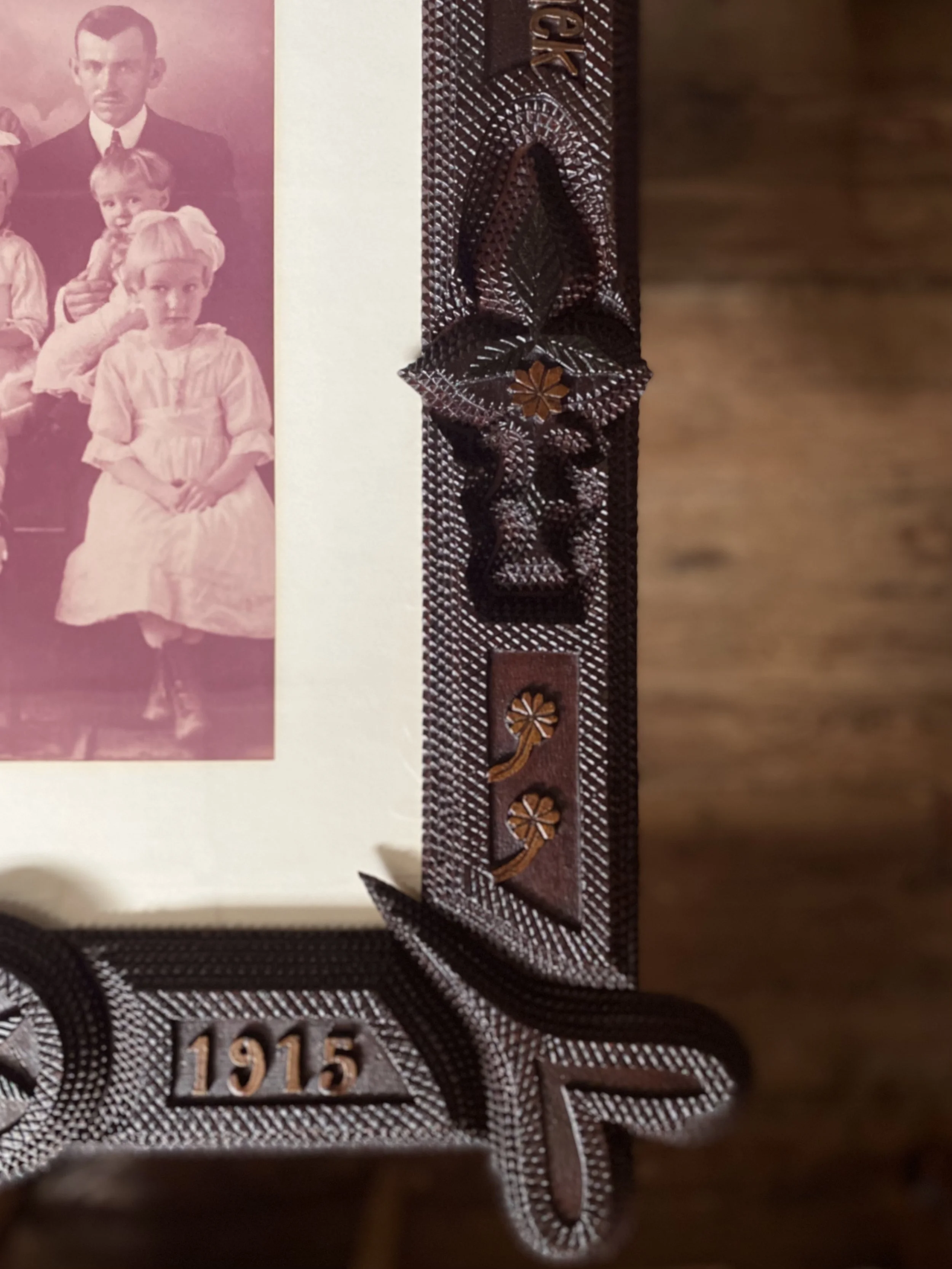
Recently a family’s cherished ‘Tramp Art’ picture frame was entrusted to us for repair and restoration. Handcrafted in the early 1900s by the customer’s grandfather, John Melhunek.
John (pictured) immigrated to the United States from Czechoslovakia. Settling in New Jersey and working as a house painter. When his health started to decline he took the advice of his doctor and transitioned to the life of a farmer in the Delaware countryside. Most likely this period is when the tramp art frame was completed. It was an honor to be part of this piece’s journey and spend some time reflecting on this truly excellent example of Early American Folk Art.
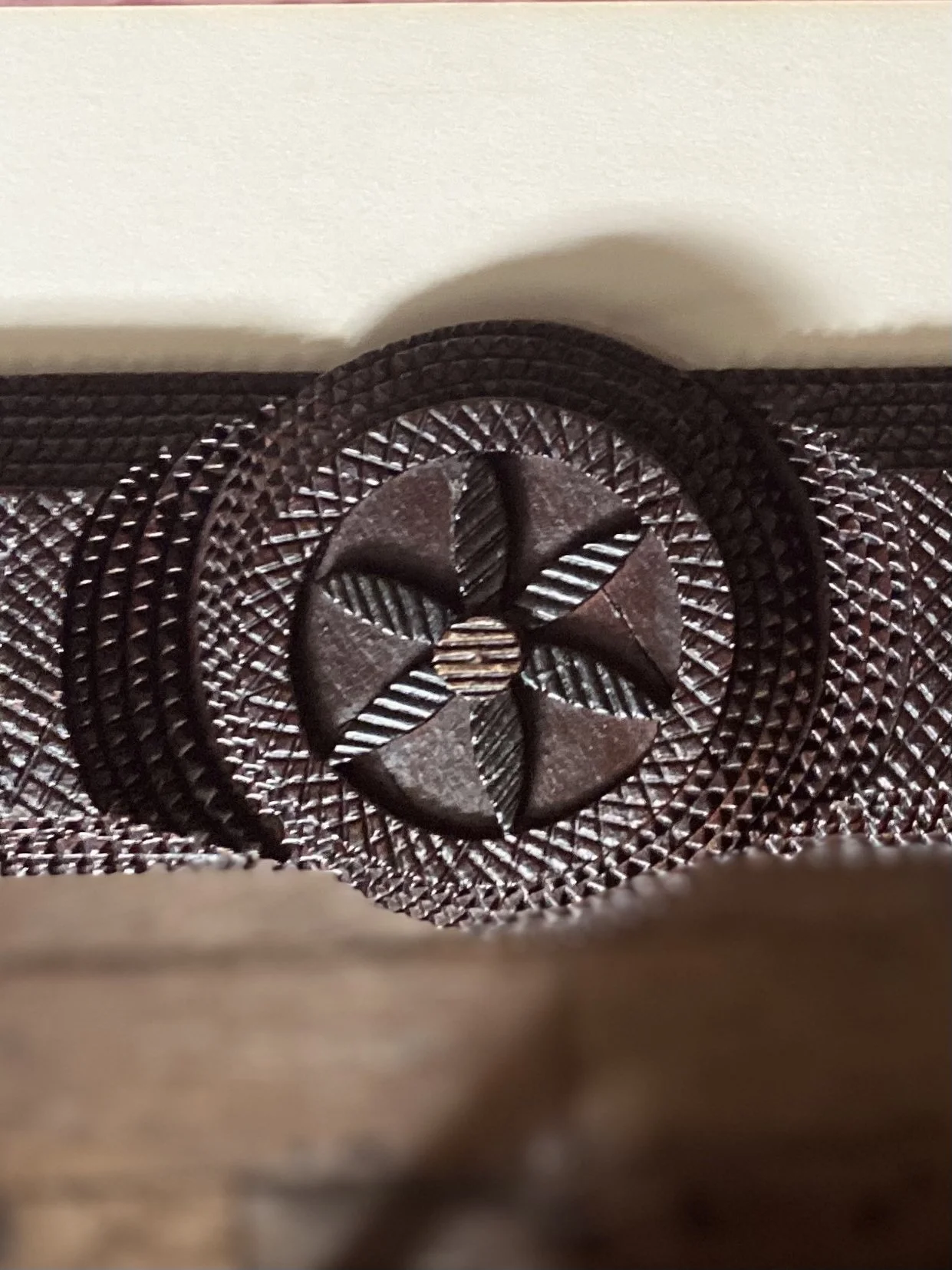
Tramp Art was a style of wood craft dating from the 1870s into the 1940s. Relying on discarded materials, primarily cigar boxes and shipping crates, makers would chip carve and layer thin pieces of wood to create dimensional, geometrical objects such as jewelry boxes, picture frames and even furniture. These topographical creations were made by the common man. Factory workers, tradesmen and farmers would occupy their free time with a basic pocket knife. Without guidelines, previous examples, or preconceived patterns these humble makers were free to express. A new art form emerged, spreading person to person throughout the country. Busy hands finding inspiration in their personal lives and stories.
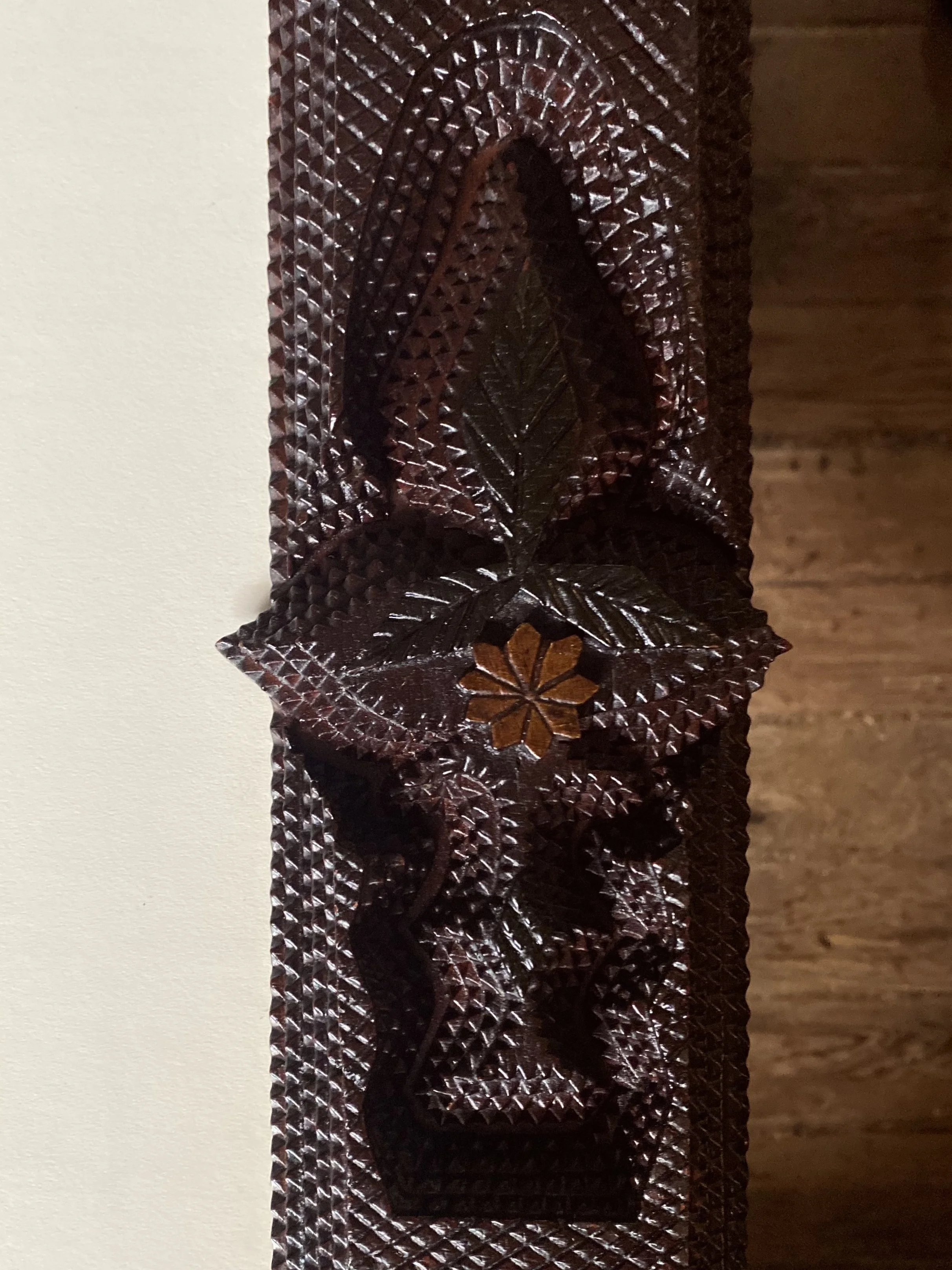
American Folk Art is simple and pure. Existing outside the academic world of fine art and European standards. Imperfections reinforce authenticity and self taught artists were finding new ways to adorn their living spaces, honor their heritage and depict their new lives in America.
The 1876 United States Centennial brought themes of patriotism and a new found sense of national identity to the art form. Scenes and symbolism romanticizing American culture were often featured in paintings and patchwork.
As materials became more available to the working class, practices such as quilting, pottery and needlework grew in popularity. Artisan occupations such as sign painting, carpentry, and blacksmithing honed the skills that directly translated in to folk art creations.
These items were made for personal enjoyment and not intended for commercial production. The intention was focused on the craft and task at hand during a time when distractions were minimal and idle hands were considered the devil’s playground. Primitive furniture, pottery, textiles, weather vanes, and paint decorated tin ware were a way to personalize the homes of friends and family.
Objects that did get exchanged were done so within the local communities. Sharing one’s craft, admiring the creativity of others and spreading inspiration. Portraits were done by neighbors, quilts made for family, and items were gifted, traded, handed down and often generosity was expressed through community efforts.
American Folk Art was peaking during the Great Depression. Economic times were difficult and even though money and resources were scarce families could embellish their lives with immensely intricate, beautiful handmade things. When the Great Depression finally subsided people turned again to mass produced and commercially available wares, causing a decline in the need for people to make their own.
Collected and admired by the working class since the mid 1700s, it wasn’t until the 1920s when American Folk Art was formally recognized as a legitimate art form. Abby Aldrich Rockefeller, the wife of John D. Rockefeller Jr. was a founder and active supporter of the New York Museum of Modern Art. She appreciated the aesthetic qualities of these artifacts and recognized their historical significance. In 1932 the Museum of Modern Art held an exhibition entirely from her collection. ‘American Folk Art: The Art of the Common Man in America, 1750-1900’. The New York American Folk Art Museum was founded in 1961, just two years after the moniker ‘Tramp Art’ was named by artist and writer Frances Lichten, and decades after the peak of the craft.
In January 1994, Sotheby's in New York held a landmark, record-breaking auction for the Folk Art and Americana collection of renowned scholars Bertram K. and Nina Fletcher Little, totaling $7.4 million and doubling pre-sale expectations.Proving that top tier American Folk Art could command fine art level prices at major auction houses. This stood as the benchmark for American Folk Art auction sales for two decades.
In its heyday, crafting Tramp Art spread in popularity all throughout the country. Examples can be found nearly everywhere, though this particular frame with its level of craftsmanship and family connections is seemingly rare in our corner of the world. So who knows, maybe someday, decades after you are gone, auction houses may fetch record breaking prices for the work that you do, but creating family heirlooms, gifting neighbors and friends with beautiful handmade things and putting effort and creativity into something without expectations, definitely priceless.